How You Can Create a Sense of Wellbeing

6984394425_edfa40f59c_o

We all seek “happiness.” It means something different for everyone. For some, it comes from a material place; you have everything you want. For others, it’s emotional with all of your needs being met. Some believe that being happy is our main goal in life, however, there’s more to life than “happiness.”

In his book Flourish, Dr. Martin Seligman discusses how the field of positive psychology has moved beyond the idea of happiness being the ultimate measurement of a satisfied life. Someone that is happy has positive emotions, are engaged and their life has meaning and purpose. A truly flourishing individual, however, also needs to exhibit at least three of the traits that indicate well-being: self-esteem, optimism, resilience, vitality, self-determination and positive relationships.

In my coaching business, I use Gallup’s WELLBEING assessment. This assessment looks at whether you’re thriving or merely surviving in five different areas: your career, social engagements, financial and health situations and community involvement. The individual qualities identified by Dr. Seligman can come into play in each of these areas. For example, many of my clients have less than thriving scores in the realms of finance and health; usually directly related to low self-esteem and optimism and a sense that they have lost the ability to determine their future. Once we uncover some new options and they start moving forward in their life by making some choices (and sometimes taking some risks) their scores start to improve.

So, what can do on your own to foster a higher sense of well-being and move towards flourishing? It comes down to the core of what coaching offers and this really isn’t any secret; you need to change the way you see the world. You’ve read this in some of my other posts and have likely seen it elsewhere: the way you perceive the world directly impacts your thoughts and emotions and those drive your behavior. If you don’t like your actions or thoughts, you need to change the way you see things. Here’s an example, you’re miserable at work. You feel like there’s no place to go, you’re not appreciated and the work is mind-numbing. This would likely reflect in your performance at work. Instead of feeling like you have no power of self-determination, look at your options. You can find a new job, start improving your skills to switch careers or, even better yet, look at your perceptions around THIS job and see if you can create something new for yourself. You always have choices; sometimes it just takes some reflection to see them clearly. As a bonus, once you start to take control of your life, your optimism and self-esteem will increase too.

If you’re curious where you stand on things like optimism, resilience and relationships, the University of Pennsylvania offers a few free assessments you can take in the form of short questionnaires. Also, if you’re interested in trying the WELLBEING assessment, you can purchase a copy here. I’d also enjoy the opportunity to talk through your results with you. You can block out some time on my calendar for a no-cost session just as a chance to get to know each other.

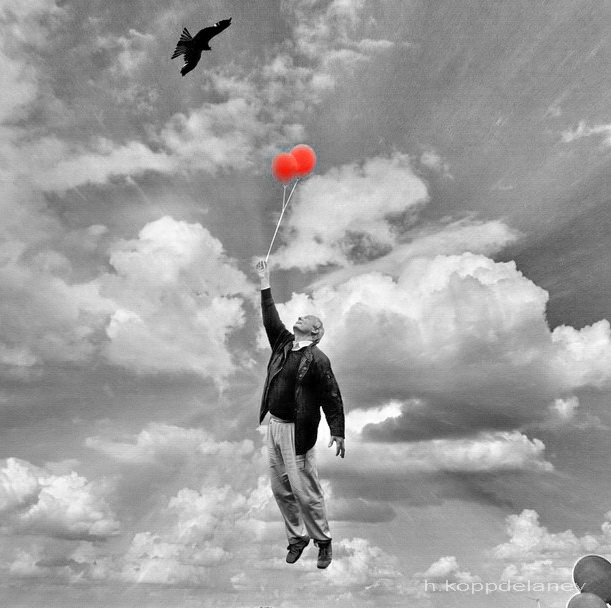
Photo credit: h.koppdelaney / Foter.com / CC BY-ND

Ignore Your Itty Bitty Sh*tty Committee

342644561_1e1dca4e64_b

We each have our own inner critic or gremlin. I’ve even heard it called the “Itty Bitty Sh*tty Committee.” This is that voice (or the voices) you hear in your head telling you that you’re not good enough, smart enough, trim enough, rich enough, strong enough….to have the life you deserve to live. Some of its favorite words are “can’t,” “shouldn’t” or “should have” and “never.”

Most of us can probably name or point out our gremlin. It’s been with us so long that we’re very familiar with how it behaves. For example, I’ve named mine “Killjoy.” My gremlin loves to taunt me with an overly burdensome sense of responsibility…for everyone and everything. There’s no time for fun and play when there’s so much that needs to be done! My gremlin has a particularly good time needling me because it knows it is completely contradictory to a core value I hold and that’s the importance of being playful.

So, I wage war with my gremlin and “smite” it on a regular basis, right? Hardly! Our gremlins are very strong and they thrive on our energy. The more attention we give them, the stronger they fight back. Instead of fighting, the key is first acknowledgement then dismissal. You really hurt your gremlin when it knows it has been seen yet you’re strong enough to do your own thing. In his book, Taming Your Gremlin, Rick Carson tells us that

To be at choice from situation to situation and from moment to moment is vitally important in taming your gremlin.

One of the most common gremlins for anyone that used to be overweight is self doubt or fear; lacking confidence and always worrying about gaining weight back. The voice tells you, “You might have success now but you can’t sustain this.” or “You’ll never be able to relax in your new skin. You’ll always have to worry about every little thing you put in your mouth because you know you’ll mess up eventually.” When these really negative thoughts pop up, first recognize them for what they are; untruths being sustained by runaway perceptions. Next, remember, you always have choices. In whatever situation you find yourself, will you choose to listen to your inner critic or will you use information you know to be true? How did you lose that last pound, or ten or hundred pounds, in the first place? You know what your body needs to be healthy now. No gremlin can suddenly take the power of your knowing away from you. Ignore it and choose what’s right for you.

Be aware that your gremlin is pretty smart. As you get better at ignoring its voice, it will change and turn into something new trying to get your attention again. Stay wary and never let the bugger get the better of you.

Photo credit: practicalowl / Foter.com / CC BY-NC

How Inspiration Leads to Motivation

5250487136_04241b5283_b

I’ve worked with a few people recently that said they were lacking motivation. This is actually a great coaching topic because the answer can only come from within. No one can make you motivated. However, our perceptions can be molded through study and contemplation. We can be inspired by others. I went looking for individuals that had successfully motivated themselves to achieve great things with regard to adopting a healthier lifestyle. I found a few stories that could help you change the way you look at your own challenges.

First, there’s Eli Sapharti. In his own words, Eli made a journey from FAT Boy to FIT Man. He lost 110 pounds to be in the best shape of his life in his 40s. He has now devoted his life to helping others do the same.  Next, I learned about Rick Wyckoff who is “Constructing a New Rick” on Facebook. Rick struggled with obesity since childhood. Now, this mild-mannered but driven individual is recording his weightloss and engaging others to join him in a very active community he has built on Facebook. Finally, I discovered Nathan MacDonald, the Fotographing Fat Kid. Nathan is documenting his “epic battle” to lose weight in a simple but informative blog. (He’s always wanted one, now he has one.)

What do these three men have in common? They all developed a very clear vision of where they wanted to go and why they were going there. I’m guessing the “how” and “when” may have sometimes still been very valid questions, but you get a sense from their writing that they no longer question their destination.

How can their stories help you? Simply follow their lead. If it isn’t already cemented in your brain, consider the change you need to make to reach a healthier lifestyle. What will the change provide? How will it make your life better? Who else is involved? (Maybe you’re “doing this for the kids.”) What are the costs if you don’t change?

Other questions will start popping up too. “What if I fail?” is, unfortunately, pretty popular. Well, I’d come right back with a follow-up question…“What if you succeed?”

Photo credit: mariachily / Foter.com / CC BY-SA

How Keeping a Journal Can Change Your Life

Journalling

Women are familiar with journalling. When they can hold a pencil, they receive their first Minnie Mouse or Cinderella diary with the cheesy locking clasp. They grow to recording their deepest teenage secrets in their diary. Only to have them discovered by their snooping younger brother.

For most men, this is completely unfamiliar. We have a hard enough time with a grocery list let alone recording a deep thought. There seems to be a stigma associated with journalling for men. It’s seen as a feminine pursuit. It wasn’t always this way. In fact, very influential male figures were chronic journal writers. People like Benjamin Franklin and Winston Churchill recorded thoughts and events throughout their lives.

What is a diary as a rule? A document useful to the person who keeps it. Dull to the contemporary who reads it and invaluable to the student, centuries afterwards, who treasures it. – Walter Scott

In my coaching practice, I use journal writing to enhance my clients’ growth experience. You can see from the Road Trips I set on my Facebook page that I ask people to reflect, make lists and jot down notes. A journal would be a great place for this work to occur. I tend to get some pushback initially from men. The hesitation originates from two distinct places; they don’t understand the value and they “don’t know how” to keep a journal.

Keeping a journal allows you to develop your creativity and gives you a place for reflection, verbalization and visualization. What’s more important are the life propelling habits it helps develop. The core benefits of coaching are that it helps people see their choices, helps them make decisions and sets a level of accountability. A journal provides a place for similar work to occur. Sometimes just writing down a thought, getting it “on paper,” somehow makes it more real. Sharing that with someone else creates a sense of accountability similar to a contract. You feel bound to meet the commitment you made to yourself.

What’s funny is that expressing the value of this type of writing isn’t the hard part. For some reason, guys get hung up on not knowing how to “do it right.” Here’s a secret, there is no right way! There are two basic ways to keep a journal; electronically and on paper. Use whatever method works best for you, or both. What’s important is that you use your journal consistently and honestly.

An electronic journal is done on your computer, tablet or phone. You can use an app specifically designed for keeping a journal, use a word processor, a text file or other system. I’m a prolific Evernote user. I run a large portion of my business using Evernote, take seminar notes and keep to-do lists there so it’s a natural place for me to keep my journal. What I like best is that everything is synced between all of my devices so I can pick up my phone or iPad and create a new note whenever I have a thought.

Some guys prefer the physical element of paper though. It’s more concrete. To be honest, I have paper journals all over the house too. I’m particularly fond of Fieldnotes. Believe it or not, actually writing on paper can still be faster than typing. It also offers a greater degree of expression by allowing you to sketch, paste snippets from magazines or whatever you can think to add.

Even though I provide some direction, the idea of a blank page can still be scary for some clients. I’ve been looking into some journals with light formatting to help the process. I just discovered one designed by Moleskine that I think holds some promise. Part of their “passions” line, the new Wellness Journal has some predefined sections to help you keep your journal. It has sections for recording diet and exercise related items which you’d expect in a wellness journal but it goes further. It has places for you to do goal planning and to record your breakthroughs and victories. It also has an inspirations section that is designed for sketches or pasting things that simply push you forward. It ends with a number of blanks sections that you can customize by using the included labels. These are great for coaching instructions or road trip discoveries.

Keeping a journal provides you the reflective surface needed to promote lasting change. There isn’t any “right way” to journal as long as it is done regularly and with an incredible level of honesty. To get you started, pick up your (new) journal and answer the following question:

What’s the one change I could make right now that would have the most significant and positive impact on my life?

Look back at your answer. I think your journal just started the process of changing your life!

Photo credit: David Robert Wright / Foter / CC BY-NC-ND

The Key to Happiness Might be in a Toybox

6390911601_01bc012211_b

There’s a feature on the Motoring Forward Facebook page where we set a weekly theme and provide a few exercises for self discovery. This week, in keeping with the Christmas holiday, the theme is “playfulness.” As I was looking for an appropriate image for the post, I started to discover how difficult this particular “road trip” might be for some men. Society, to some degree, sees playfulness as frivolous. In certain situations, like playing with kids, it’s fine but how can it fit into other parts of your life?

When it comes to the trait of playfulness, I’m on the upper-end of the goofy scale. I’ve never had a problem being silly, horsing around or being downright impish. This is part of who I am and I’ve been able to successfully integrate this trait into my life. As a director in a high-tech company, it allowed me to work through stressful HR issues and I developed a reputation for not letting much bother me. Now, I also had detractors that thought I could have been “more intense and serious” but my staff appreciated that they didn’t have to worry about me going off on them; they just had to listen to my corny jokes or puns.

So, outside of dealing with children, why is being playful seen in such a negative light for men? Dr. Stuart Brown is a psychologist and leads the National Institute for Play. They focus on opening opportunities for play in relationships, health, education and corporate environments. He observed that “Executives running organizations do not have the information to understand the true nature of play. Even those who have a natural appreciation and temperament for the benefits of play see play and work as separate. Some believe that play is the opposite of work. Yet science already provides data to show that playful ways of work lead to more creative, adaptable workers and teams.” Note the belief that work and play are opposites. Brown is often quoted as saying that the opposite of play isn’t work; the opposite of play is depression.

In his excellent article about adult play, Joe Robinson explains that “Play brings you back to life — your life. Adults need to play because so much of our life is utilitarian. We need to reconnect with the things of our lives that ground us in who we really are and why we like our lives. When a 40-year-old goes headfirst down a water slide, that person is not 40 anymore. A few decades have been knocked off, because something inside has come alive again. It should be pretty obvious that the animating spark of play is the fast track to happiness.”

How might you add a little more play into your life? Here are some instructions to get you started:

  • Make a list of what brought you joy when you were young. Was it sports, puzzles, games or being creative?
  • Map these to activities you can do right now. Maybe you could join an adult sport league, start a family game night or get back to that creative writing you started in college.
  • Make a commitment to explore these activities over the next 30 to 60 days.
  • For the purpose of your own discovery, start a journal of what you’re doing to be more playful. Do some reflection and note the impact it has on other parts of your life.
  • Once you feel comfortable with your new, playful self, think of how you can introduce play into your professional life. Could you increase creativity or lower stress?
  • Finally, bring some playfulness into your relationships. This part you may want to keep out of your journal.

Play is a necessary part of being a whole and fulfilled person. It’s required for your wellbeing and happiness. What are you waiting for; go out and play!

Photo credit: Kalexanderson / Foter / CC BY-NC-SA

Is stress eating you? Or are you eating it?

2344638543_a99cbb6a22_b

What would happen if you were in a room full of some of your favorite foods and were also under a lot of stress? With the holiday season, both the food and the stress are all too prevalent. A lot of people wonder if “stress eating” ever goes away. The answer is up to you.

First, a statement that’s going to mess with your mind—there is no such thing as “stress.” What we call stress is really our reaction to some external stimulus. Nothing is inherently stressful; instead, our thoughts give these external events the power to throw us into what we recognize as a stressful state. Your reaction to the stimulus lies in your understanding that you have choices in how you perceive and respond to the situation.

Here’s an example you might recognize. You’ve been invited to your company pot-luck and everyone is encouraged to bring their favorite treats so “we can eat all day long!” You immediately break into a cold sweat, panic and think “man, how can I take that day off?” You’ve stressed yourself out. However, you haven’t considered all of your options nor have you thought about the ramifications of your reaction. I’ve written in the past about how excluding yourself from social events because of the presence of food is counterproductive. It only sets you apart from others, socially isolating you, and prevents you from participating in an enjoyable event. Instead of panicking, look at your options. First, you have complete control over what you’re going to bring to the pot-luck. How about something healthy that you could nibble on all day like a veggie platter? You might be thanked for being the only person that thought to bring something good for you. Your second choice is what you actually put in your mouth. You brought something you know you can eat without guilt, so start there. Next, fill up on light foods, drink a lot of water, use really small plates, circle the table a few times before you take anything and pick one indulgence that you’ll save for the end. When you eat that, you’re done. You’ve likely built up your own techniques for dealing with “all you care to eat” scenarios so pull those tricks out of your bag. See, instead of being stressed, there are plenty of other options as to how you view this event.

Your behaviors in stressful situations are learned responses triggered by thoughts. The cool thing is we have complete control over what shoots through our brain. Your first line of defense against stress eating is knocking out the root cause. However, there are times when your thoughts will get away from you. Your backup plan is to use something called “countering.” If you find yourself in a situation where you’re stressed out and your reflex reaction is to reach for food, counter that action with a gating mechanism; preferably something that’s good for you. For me, I used push-ups. Every time I went for a snack, I dropped and did 50 pushups. Now if I’m a little stressed, it’s physical activity I crave and not food. What might work best for you? What would sidetrack you from reaching for that donut or beer? (Or both?)

You choose whether or not you’re stressed out. If you’re already there, your next choice is whether or not you reach for food. There is no direct link between that external stimulus and food going into your mouth. Remember that you’re in control!

Photo credit: practicalowl / Foter / CC BY-NC

Recovering from Self-Esteem Rollers

172729251_7a7bba2d5f_o

If it’s not clear from the word, your self-esteem originates from within, not from others. Accordingly, it isn’t anyone’s right to take it away from you. But we let it happen.

If you’ve been overweight for a portion of your life, it’s likely that your self-esteem has taken a hit. From personal experience, I think the impact is greater if that period included your childhood or teen years; but then again, kids are resilient. The feelings of being unworthy have built up because we allowed the negative talk of others (I call them esteem rollers) to create a mental picture that we’re not whole or complete. Our need to belong has been thwarted.

Changing our outside by getting in shape doesn’t magically fix the internal wiring. You may notice that you still have a difficult time taking a compliment; it sounds contrived or forced. Or maybe you go fishing for compliments? These are just two signs that you may still be entertaining those negative thoughts.

The concept of self-esteem and the psychology behind it is pretty deep. Numerous researchers have spent their lives documenting their findings. I’ve done a fair amount of reading on the topic and have helped a number of individuals examine their perceptions. Below are just a few things I’ve learned that help rebuild self-esteem.

Don’t Compare Yourself to Others

There will always be someone that’s thinner, stronger, faster, richer, smarter…. Don’t drive yourself crazy by pining for what you don’t have. Instead, be grateful for what you do have.

Practice Positive Self-talk

Like, love and respect yourself. It’s that simple.

Don’t Look for Acceptance from Others

You can’t look for your self-worth to originate from the approval of others. You do need to be self-accepting. I’m not saying to give up on becoming the best version of you possible; you just need to acknowledge your strengths and weaknesses and own them.

Focus on What Makes You Special

Revel in your difference; it will likely be what draws others to you.

Surround Yourself with Supportive People

Create a support network of people you trust and that appreciate the authentic you without judgement. This will give you the true sense of belonging we all desire.

Take Care of Yourself

Eat right, exercise, and do what’s right for you.

Discover your Life’s Purpose and Make it Happen

This last one is probably the most difficult. For some reason, people have a hard time contemplating the fact that there’s likely a specific purpose for them. Something they are uniquely designed to contribute to this world. It takes a lot of introspection, but finding that purpose and pursuing it seems to be the vitamin B-12 for self-worth.

Regardless of where you’re at in life or what events may have caused the negative images that degraded your self-esteem, know that it’s completely in your power to recharge it. After all, it belongs to you.

Photo credit: dan taylor / Foter / CC BY

Do You Hide Under a Joke Cloak?

133438186_2223af5f2f_b

“I have the body of a god…Buddha”

“It’s a washboard stomach…just with a full load of laundry.”

“I’m really in shape. Round is a shape, right?”

Some use humor to deal with uncomfortable situations. It’s not a bad mechanism. Self deprecating humor can, however, get you trapped into a really negative mindset. We use these jokes for different reasons. If we make people laugh, that means they like us, right? Or maybe we think if we beat people to the punchline, the joke will be less painful? Be honest with yourself…are these really the case?

You see, we create our own reality. If we think we’re a joke, then we project ourself as the same. That impacts how others treat us, creating a vicious circle. If you talked about your friends the way you talk about yourself, how many friends would you have? It comes down to respect. You deserve it, you want it from others so you need to show it to yourself.

This negative self-talk is just like any other bad habit you’ve ever addressed. First, you need to become aware of it. Notice when, where and how often you make yourself the subject of your stand-up routines. Next, replace it with a positive behavior. Instead of jokes, try honesty. (Ah, that can be scary!) How about something like “Yeah, I’ve struggled with my weight for years. I have a few more pounds to lose, but I’ve successfully lost x pounds in the past few months. I feel pretty good about that!” I think you’ll be surprised at the effect. You’ve provided an affirmation to yourself, you’ve shown trust and honesty towards someone else (what a great gift to them for which they’ll remember you) and just maybe you provided some inspiration to someone that is contemplating a change of their own. Isn’t this worth more than a few laughs?

I’d be curious to hear back from any of you that have successfully turned away from your own joke cloak.

Photo by Flickr user Tom Goskar (CC BY-NC-SA 2.0)

Adopting a Healthy Lifestyle Change

Id-10070653

A few days ago, I had a talk with a guy about why men tend to gain weight back after having lost it. I went into details of positive mindset, confidence, support systems and overall well-being. His reply was “That all makes sense, but I don’t think that’s the case for me. For me, it’s just laziness.”

Why do we lapse back into old behaviors? Is it because we’re lazy? Ask just about any guy if he’s lazy at work and you’ll likely get the indignant reply of “Of course not, I work my a** off.” If that’s the case, why do we suddenly get lazy in matters that are vital to our well-being?

According to the Transtheoretical Model of Behavioral Change (that’s a mouthful, just hang on for a few sentences) developed by James Prochaska, the maintenance phase of a new behavior is composed of a series of spirals where an individual often cycles back to earlier stages. These lapses are a normal part of adopting a healthier lifestyle. It’s only the transition to the final termination phase that ensures the behavior has been fully integrated.

I believe these temporary bouts of “laziness” are really just short lapses and people benefit from learning to recognize them as part of the change process. What’s important is eventually working through the maintenance stage and finally reaching the complete adoption of the healthy behavior. How can that be done?

First, you need to believe in your ability to make the change; this is called self liberation. I break this down further: believe change is possible, believe you deserve it, then take responsibility for making it happen. You also need people to support you in the change (helping relationships) and, finally, you need to substitute healthy ways of acting and thinking for the unhealthy (counter conditioning.) Overriding a self-defeating mindset can be tough on your own. This is where a strong support system is vital. You’ll also need to develop strategies for introducing healthier ways of behaving. This will take planning and discipline. If any of these are difficult for you, you may spiral into more of these lapses prior to finally reaching that termination state. Or you may never get there. If you can’t make it through this on your own, get someone you trust to work with you.

Once you’ve reached your wellness goal, whether that be weight loss or something else, your plan turns into “maintain.” This state of hovering raises the opportunity to slide backwards. If you do, realize it’s part of the process and don’t let your negative self-talk that you’re “lazy” undo all of the progress you have made. Keep moving forward.

Image courtesy of David Castillo Dominici at FreeDigitalPhotos.net

It’s Not Cheating, It’s Called Living

Id-10090781

One of the hardest changes anyone can make after they’ve successfully lost weight is establishing a more healthy relationship with food. While losing weight, you monitored everything that went in your mouth. To move your life forward and leave that fat-suit behind, you need to learn to stop treating food as an enemy.

Here’s a quick story. A young lady was excited that she had been invited to her first fancy work affair. It was at a really nice restaurant that she’d never be able to eat at on her own because of the high cost. She was really afraid, however, that she was going to make a mistake with her eating and “cheat.” She was petrified! The worry around food was going to ruin her enjoyment of this special occasion.

Food nourishes us and gives us energy. It’s also a lot more. Food is often the focal point of social gatherings and, honestly, provides us with a lot of pleasure. Without changing thought patterns to allow you to successfully navigate these situations, you’ll find yourself missing out on everything life has to offer. You can enjoy these special occasions by learning that the occasional indulgence does not mean you’re going to immediately gain back your weight. You just need to be smart and act the part of the fit person you’ve become.

Keep everything in balance. Your goal is to enjoy the event, participate fully and not let food panic ruin your time. Just be mindful that this is an indulgence. You’re not changing your eating patterns to match this meal going forward; this is something special. Acknowledge that mentally and give yourself permission to enjoy the meal and the time with your friends or family.

Make some smart decisions. Remember, you’re a fit, healthy person now so there are some choices you’ll make naturally. If you’re at an awesome steakhouse, you get a leaner cut of steak, a lot of veggies and maybe a decadent side that you share with a few people. For drinks, you have a little red wine. When the meal comes, the portions are huge so you save at least half to take home. Finally, dessert. You pass on it, right? Heck no! But you do share something with all your friends and enjoy every bite you do take. You might hit the gym extra hard the next day but you do it because it feels good and you know it’s good for you—it’s not done out of guilt.

By setting the correct mental image as we just discussed and allowing her new healthy instincts to take charge, our young lady truly enjoyed her special event. It created great memories and she has no guilt.

You worked hard to get where you’re at today. You have to trust your knowledge about the right way to eat. You’re also active now and you’re burning plenty of calories. Allow yourself these “free meals” periodically. Otherwise, you trap yourself in an eating prison that will make you feel like you’re dieting for the rest of your life.

With the Holiday season approaching, you’ll have a number of opportunities to try out your new skills. How will you see these events? Will you create potential pitfalls or opportunities to celebrate and enjoy your life?

Image courtesy of imagerymajestic at FreeDigitalPhotos.net