Darned if You Do, Darned if You Don’t

hands-37

It’s easy to get stuck in your life. You have a decision to make and something looming over you prevents you from making a choice. What if you’ve gotten yourself bound up in a position where you can’t make a good decision based on your current perceptions?

I just went through an exercise with a group where everyone had to list their excuses (limiting beliefs) for not moving their businesses forward. A pair of statements on one list jumped out at me:

I’m afraid of what success will bring.
What if I fail?

They didn’t leave themselves much room here. You’re either going to succeed or fail in business. For this individual, it was readily apparent how their perceptions had them frozen.

A typical coaching response to “What if I fail?” might be something like “What if you succeed?” but that has already been precluded by the prior statement. This is one of those knots (I call it a “double-bind” though I know it doesn’t meet the formal definition) that needs to be picked apart carefully. One key is the use of the word “afraid.” The False Evidence Appearing Real is a great place to start the conversation. Looking into what success looks like for the individual will help identify what’s blocking the way for them there. Once a harmonious vision of success is achieved, opening that door will be easier. They can then leave the idea of failure behind.

What types of situations frequently get you bound up? How have you eventually untied the knot?

Photo credit: fortinbras / Foter / CC BY-NC-SA

How to Turn Your Commitment to Change into Action

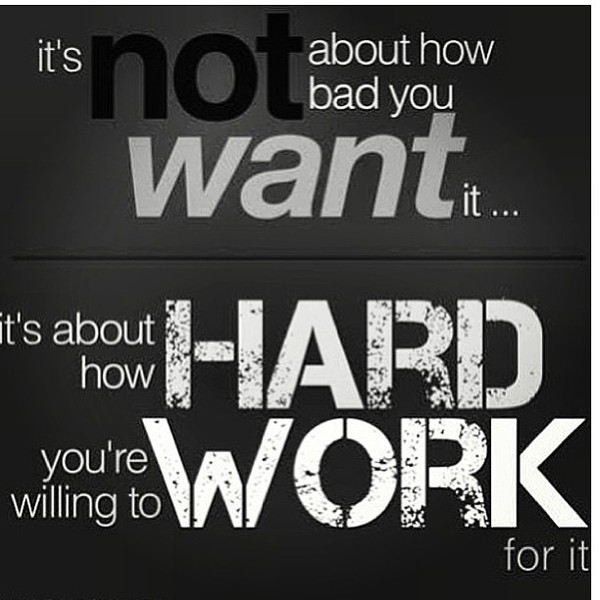
it-not-about-how-bad-you-want-it-its-about-how-hard-you-are-willing-to-work-for-it-via-freaks_of_fitness-quote-life-fitness-goals-motivation_l

Last week I wrote about how you decide to make a change. Once you’ve acknowledged the need to change a behavior and have made a commitment, you need to move from planning to some action.

Your life will be no better than the plans you make and the action you take. You are the architect and builder of your own life, fortune, destiny. —Alfred A. Montapert

When taking steps to bring about some desired change, you need to look at what has or has not worked for you in the past. You also need to be open to new ideas and be willing to change your course of action as you try new approaches. There is no right or wrong way to succeed in your goal; you need to discover through trial and error what works best for you.

One of the classic examples is losing weight. There are hundreds of diet and exercise plans and by combining these into a plan of action, there are likely millions of ways for someone to decrease their body weight to get to a comfortable number on the scale. Keep in mind that once you reach your goal, you also need to maintain the behavior. Maintaining your desired weight will likely require that you continue some or all of these activities for an extended period of time so you need to find options that are sustainable for you. For example, you might use a strict meal-plan system where all of the food is provided for you to drop some pounds. However, how likely is it that you’ll want to remain on that diet for the rest of your life? It probably wouldn’t be very enjoyable and would be expensive too.

For lasting change, consider the long-term maintenance of your desired behavior when creating a plan of action. Try to change your mindset to get to the root of the issue instead of using a quick fix that won’t last. There are two practices recommended by Prochaska that I pass along to coaching clients that can help bring about this mental shift; countering and environmental controls. Countering is replacing the undesired behavior with a healthy, more desirable one and environmental control means manipulating your setting or avoiding a location to prevent the behavior. Including either or both of these in your action plan will be helpful.

For example, let’s say you’re prone to snacking through the day. You can consciously replace that activity with another. For me, I started doing push-ups whenever I wanted a snack. This countering helped in two ways. I burned some extra calories and the activity usually made me forget the urge to snack. Over time, I began to crave physical activity when I was bored or restless and that has served me well. I also worked at a company that had a cafeteria that served cheap but gourmet quality meals. It was easy to overeat. I could have avoided the cafeteria but I would have also missed out on the social interactions that took place there. Instead, I simply started bringing my lunch. As everyone was in line getting their food, I’d eat my lunch. By the time they got to the table with the gourmet meal, I’d already be half done and fairly full. Once the conversation started, I was no longer tempted to get more food.

Once you have your steps in mind, I recommend the following:

  1. Write your plan down.
  2. Share your plan and goals with someone that will hold you accountable.
  3. Review your plan DAILY and note how you’ve done.
  4. Review your progress WEEKLY to see if your actions are working. If not, try something new.
  5. Finally, don’t give up. You’ll reach your goal over time.

There’s no single “magic bullet” that anyone can provide you to create the change you desire. All change has to come from within and you are the only person that can make it happen. Be strong, ask for help and stick with it. You’ll get there!

Photo credit: waynesutton12 / Foter / CC BY-NC-SA

Deciding to Make a Change

ID-10090072

Over the past week, I’ve had a number of friends commit to regaining their health by eating better or joining a gym. I applaud them!

Coaches help people get from point-A to point-B in their life but unless someone knows they want to make that trip, it’s a difficult road to travel. So, how do you decide that it’s time to change?

There are dozens of behavioral change models but I use Prochaska’s Transtheoretical Model of Behavioral Change. The first three stages are: Pre-contemplation when an individual can’t see or accept a problem or behavior and they resist change, Contemplation where a person acknowledges that change needs to occur and Preparation where they begin planning to take action. My friends are all in this planning phase.

Until someone accepts that a change needs to take place, (they reach that contemplation phase) there’s little that anyone else can do for them. You can try to educate, lead by example and even beg and plead but, until they see that there’s a problem, they are more likely to think that you’re the problem. What is effective is being there for them and listening. As soon as you have a hint that they are beginning to take responsibility for their behavior and have recognized the issue, then you can help them start moving forward.

Once someone is contemplating a change, they need support. People often get stuck in “I will someday” and a list of excuses here. One of the most effective tools described by Prochaska is “emotional arousal.” Expose this person to as many different experiences as possible that will reinforce the positive nature of them changing their habits. One popular example is the TV show Biggest Loser. Personal opinions aside, the show can be a great motivator. Someone watching the show that doesn’t think they have a weight issue will see it in a different light than someone that has just come to terms with the fact that they could be a contestant. Seeing others succeed gives them the encouragement that they could do the same and this might be just enough energy to stop thinking and actually start making plans for themselves.

Once you’re ready to make that change, you start planning on how to make that happen. Options here are limitless and vary depending on the behavior you’re trying to modify. The important part of this phase is that you keep moving and don’t get stuck in a cycle of “almost ready.” This is where a coach or other professional can provide great value. To see results, you need to eventually be done planning and start acting.

If you’ve recently made some change in your life, what was it that made you decide you needed to act? Once you reached that point, how long was it before you began making preparations to do something about it?

Image courtesy of Surachai at FreeDigitalPhotos.net

How to Better Understand Yourself

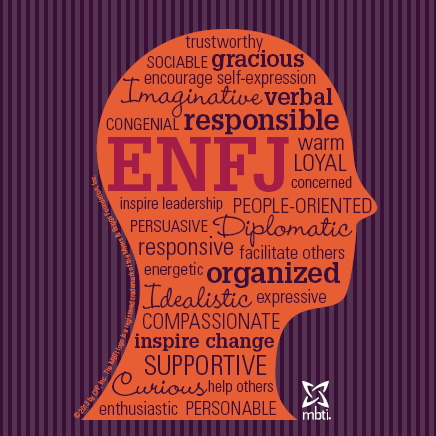
enfj-head

I’ve written a lot about the importance of being genuine; of being yourself. But how well do you really know who you are?

He who knows others is learned; He who knows himself is wise.
-Lao-tzu, Tao te Ching

When you ask people to “tell me a little about yourself” you’ll often get the biographical data dump but little insight into who they really are as a person. Some people may not verbalize this well but others simply have never stopped to look inward. They really don’t know their strengths, beliefs or values. They don’t know what makes them unique.

Coaching lends itself to bringing out the best in people. I love using assessments to help people learn more about themselves and it also gives them starting points for our coaching conversations. One of the most popular assessments is the Myers-Briggs Type Indicator (MBTI.) The MBTI gives you an indication of how you see the world and interact with others. After taking the test, you’re left with a type based on four dichotomies. For example, my type is ENFJ. Without going into a lot of detail, each type has some consistent personality traits and you can use this information to really build on your strengths.

The MBTI takes quite a bit of training to evaluate but the general information it provides is still useful. There are dozens of other assessments but my current favorite is VIA or values in action. While most other assessments tell about how you do things or interact with others, the VIA helps you discover your values or character strengths. These are the essence of your being. My VIA strengths are fairness, humor, kindness, leadership and honesty. You can take the assessment for free and the results are easy to comprehend. You can build on them through exercises of your own design or by working with a professional.

In addition to assessments, the idea of personal development is important. Once you know your greatest talents or deeply held values, learn more about making these traits even stronger. Notice I’m focusing on your strengths. Some look at their “low points” and try to figure out a way to make them better but why not start with where you’re already strong and become stellar? Read, watch videos, listen to podcasts or take classes. Do whatever you enjoy that will allow you to better understand yourself and become the greatest version of you the world will ever see!

How to Make Difficult Decisions

left-or-right-1_l

We all have difficult decisions to make. Job offers, schools to attend, who we want to spend our life with; each has consequences both real and perceived that cloud our judgement. When making a difficult decision, look at your feelings behind your choices. Are you about to do something because you should, because you need to or is it something you truly want? Stick with the “want” and you’ll never be wrong.

Let’s say you have the chance to move to a new city. You have some interesting job opportunities, it’s a place you’ve always wanted to live and you even found a house you love. On the other side, you’d be leaving family behind, you’re afraid to start a new job and think you’d lose a lot of money on your current home. What choices do you have? You feel like you need to stay with your family. You feel like you should play the job and house things safe. You really want to give it a shot though. Once you get past the fear (false evidence appearing real) your choice might be obvious.

Your decision may require you to let go of something that’s holding you in place. That letting go can be difficult. Even if what you’re letting go of isn’t good for you, there might still be a sense of loss, failure or incompletion. You need to keep your vision for the future in mind to move forward. There’s also the potential that you let go of something that truly is important to you merely for the sake of change or because keeping it seems more difficult. (Here it becomes I should change but want things to stay the same.) That’s not good either. Making the right choice always comes back to looking at your motivation behind your options.

Sometimes talking through your choices is all that’s required. I recently had a chat with someone torn about a career decision. I just asked a few simple questions and she was able to come to a decision relatively quickly. Her final comment was really typical of the coaching experience, “Thank you for helping me sort out my thoughts instead of pushing me into a certain direction. Looks like the answer was with me all along.” That’s what coaching is all about!

You’re always at choice and you do have the right answer. Just make your choice for the right reason. Do what is going to make you happy while staying true to your core beliefs.

Photo credit: jonathan.broderick / Foter.com / CC BY-NC-ND

Are You Setting a Healthy Example?

father-and-son-surf-lesson-in-morro-bay-ca-image-by-michael-mike-l-baird-1

We often see celebrities say that they shouldn’t be looked up to as role models when they’re caught doing something wrong. They claim it’s not their responsibility to “raise your kids” or that it is unfair that they are held to a higher standard because they are in the spotlight. Their actions, however, do have the potential to impact more people because of that exposure. Do you realize that you have that same power of influence within your own circle? Is the example you set for others important?

Yesterday, I was at a hospital visiting someone. I had to wait a bit so I sat in the hospital’s cafe. A group of nurses came in (I could see their RN badges) and they each ordered a “serious (large) double-caramel chocolate macchiato with extra whip cream.” Each of these nurses was overweight to obese. To make matters worse, this particular building housed the cardiac care unit. These were the same nurses that would be going back to talk to their overweight patients about the need to lose weight to prevent another coronary event.

How much impact do you think those conversations will have? We lead by example whether we like it or not. “Do as I say, not as I do” didn’t work when we were kids and it definitely doesn’t fly as an adult. If you’re in a healthcare position and you’re trying to persuade others to take better care of themselves, shouldn’t you do the same for yourself? If you’re overweight and talking about nutrition or smell of cigarette smoke and talking to a cancer patient, there is a disconnect that simply won’t allow you to be effective in delivering your message.

The parent-child relationship holds even more importance. If you have kids, are you setting them up to succeed and to be as healthy as possible? Are you keeping healthy food in the house or buying processed garbage because it’s just easier? Are you encouraging activity by playing with your kids and staying active yourself or do you plop in front of the TV for four hours every night? Children aren’t in a position to make well-thought decisions so they rely on your wisdom. They also watch everything you do. Yes, they may “want” the sugary cereal with the prize in the box but who is actually bringing that into the house? More kids are gaining weight and developing health problems at a young age. How can you turn this around? By setting a good example and taking responsibility for your own health.

I work with both men and women on this exact topic. I know it’s not easy. Some have tried to get their eating under control for years and they want to be more active but can’t seem to stick with a program. One of the most powerful motivators I’ve found is when they discover the impact they’re having on the health of others. It seems obvious, but for some it’s not real until someone holds a picture up in front of them. In one instance, I mean this quite literally. One father couldn’t stay committed to getting back in shape. He said he wanted to do it for his young son but just couldn’t make the connection between his actions and desires. We came up with the idea to put a picture of his son on the refrigerator and all of the cabinets. He even put a small one on his lunch bag and in his wallet. This made a huge difference. It forced him to reconsider his food choices and realign them with his goal to set a better example for his son. He’s doing quite well now.

Setting a positive example isn’t just related to health. Look at the way you treat yourself in all regards and compare that to what you tell others; particularly children. Does your message match your deeds or are you being somewhat hypocritical? What can you do right now to be a better example to those that you guide? Maybe you can even be an inspiration?

Photo credit: mikebaird / Foter.com / CC BY

What if You Could?

the-wall-27

Coaching is about using well-placed questions to draw out someones own wisdom to help them get from point A to point B. To help them get unstuck. Often, we ask questions that are so broad and undirected that it throws people off. This is actually done on purpose in the hope that it will help someone expand their thinking and consider options or choices that may be right in front of them. Often, putting the thought “out in the universe” can set actions in motion that would have remained untried.

Here’s a little self-coaching exercise you can try for yourself whenever you’re having some self-limiting thoughts. It uses one of the lightest and most powerful coaching questions. Let’s say you’re trying to make a really important decision. Maybe it’s around a relationship, career, or health. Your current thoughts or beliefs might be:

I could never ask that person on a date; they’re too attractive.
I couldn’t get that job; I’m not smart enough.
I can’t lose weight; I don’t have the willpower or the time.

With thoughts like these swirling around in your head it’s no wonder you’re stuck. Just stop and ask yourself “What if I could?

Seriously ponder the question. Maybe even write out the answer to make it more concrete. What tends to happen is we set up a barrier for ourself (the “I can’t”) and then simply stop. We never try to see what’s on the other side. Creating a vision of where we want to go can often become compelling enough to knock that barrier down. Or at least give us some insight on how to climb it or go around.

So, what if you could meet the love of your life. get that job or create the healthy life you deserve? What would that look like?

Photo credit: | spoon | / Foter.com / CC BY

Ask for Help When You Need It

help

I was recently working with someone through some dietary issues. Through a few questions, I became fairly certain that knowledge wasn’t the reason why this individual was having a hard time eating a healthy diet. They often replied that they simply didn’t know how to shop but I was sensing something was missing so I had to challenge them. They eventually opened up. I learned that they were embarrassment to say they didn’t know how to shop within their budget. Now that the real issue was brought to light, it was something we could work on together.

I briefly switched into teaching mode and supplied some information on how to eat well within a budget. I’ve included that for you below. For the rest of the session, I had gained their permission to explore their thoughts around asking for help when they need it. In this instance, and others I’ve encountered, this hindrance was rooted in the same sense of shame or embarrassment that causes so many esteem issues. We’re afraid of the judgements others will make in light of our lack of complete perfection. For this individual, we walked through the scenarios of them asking or not asking for help. Not asking for help would have lead to further health issues while their eventual opening up and reaching out resolved the issue.

What they learned is that everyone needs help at points in their life. More important is that no one can help you if you don’t ask.

If you need help with something in your life right now, you have two options. Are you going to stay the course, afraid of the perceived sense of shame in asking for help, or will you be just a little brave and maybe quickly and easily solve the problem?

Photo credit: Gwendal_ / Foter.com / CC BY-NC-SA (derivative)

Here are a few resources on how to eat healthy on a budget.
http://greatist.com/health/44-healthy-foods-under-1
http://www.choosemyplate.gov/healthy-eating-on-budget.html
http://www.mensfitness.com/ian-cohen/cheap-sources-of-healthy-protein

Your Change is About You

h-t-romog-n-ous-van-sh-ng-l-n-s-synton-a_l

We all need to change at points in our lives. Some changes are more urgent than others.

I work with a lot of individuals that realize their health and well-being are suffering because of choices they have made and they need to make some changes, They may even have reached a point on their own where they have developed a plan of action. They often become stuck at this point though and have a difficult time moving forward.

Some of the more common roadblocks are fear (of failure and success) and feelings of being unworthy of the positive outcome. Often, “it’s too hard” comes up but that’s really just an expression of lack of confidence. The self-imposed obstacle that will most quickly bring about a challenge from me, however, is “It’s too late for me to change.” I’m learning this argument is often raised when there is another person involved. Sometimes people are afraid that their change will alienate their spouse or partner and make them feel left behind. Others feel they need and don’t have their full support.

If you have a spouse or partner that isn’t as supportive as you’d like, here are a few pointers:

  • Clearly explain how the change you’re pursuing will make your life better. Convey how that will positively impact the relationship too.
  • Explain that you’d really like their support and how they can best provide it.
  • Invite them to join you to make the change together, if it makes sense. If they want to join you, great, but you’re not expecting or demanding any change of them.
  • Involve them as much as possible if they’re not participating with you. For example, ask them to hold you accountable for your diet, workout, etc.
  • Celebrate small milestones and goals together.
  • If this is something for which they truly can’t provide their support, then acknowledge that but ask them to at least respect your desires and not detract from your efforts. Find someone that can provide support but make sure that this person isn’t someone your partner would find threatening.
  • Should your partner ever resort to sabotaging your efforts, then consider taking a serious look at the relationship.

The most obvious solution is to work on the change together. If you both smoke, quit together. If you both want to get in shape, workout and improve your diet together. Of course, you can’t force someone else to change. Trying that can cause a rift in the relationship. You also can’t make your success dependent on their level of participation. If you’re making a positive change for yourself, then you’re the only one that can be truly accountable for your success.

Photo credit: jef safi \ ‘pictosophizing / Foter.com / CC BY-NC-ND

How We Treat Ourselves

march-5th-2008-everyone-should-give-themselves-a-slap-on-the-wrist-sometimes-1

Coaching is about asking questions and listening. You help people bring out their own wisdom to move forward in their life. Often, the coach learns a lot by being exposed to others’ knowledge.

During a recent session, a client made a values statement that really struck me. They said “Whenever I hear someone say ‘I don’t have time’ I always tell them to tack on the words ‘for you’ because that’s what you really mean when you say ‘I don’t have time’….’I don’t have time for you.’ ” I had never really thought of it that way before but it rings true. That was completely accurate for this person. They always make time for others. What’s interesting is that this may also be at the root of personal care issues because the statement “I don’t have time for myself” seems to be acceptable to this individual.

We often treat ourselves differently from how we treat others. I’ve worked with some of the most kind, generous and caring people that were harsh and ruthless towards themselves. In theory, we’re not supposed to be able to love and care for others more than we do ourselves. I don’t think these individuals dislike who are what they are. Instead they have a misplaced sense of guilt. They feel like they shouldn’t like themselves or feel worthy because false perceptions tell them that others don’t.

To get out of this trap, do away with the external judgements. Others likely don’t know what a great person you are and their opinion really doesn’t matter anyway. Acknowledge your strengths and gifts and celebrate successes publicly. You may be surprised by how many are celebrating with you. Also, take time to care for yourself. If you have the attitude of “I don’t care about myself” then you’re showing the people that love and depend on you that “I don’t care about myself…or you.”

Are there inconsistencies between how you treat yourself and others? How might you bring those more in line?

Photo credit: Stephen Poff / Foter.com / CC BY-NC-ND