How to Make Difficult Decisions

left-or-right-1_l

We all have difficult decisions to make. Job offers, schools to attend, who we want to spend our life with; each has consequences both real and perceived that cloud our judgement. When making a difficult decision, look at your feelings behind your choices. Are you about to do something because you should, because you need to or is it something you truly want? Stick with the “want” and you’ll never be wrong.

Let’s say you have the chance to move to a new city. You have some interesting job opportunities, it’s a place you’ve always wanted to live and you even found a house you love. On the other side, you’d be leaving family behind, you’re afraid to start a new job and think you’d lose a lot of money on your current home. What choices do you have? You feel like you need to stay with your family. You feel like you should play the job and house things safe. You really want to give it a shot though. Once you get past the fear (false evidence appearing real) your choice might be obvious.

Your decision may require you to let go of something that’s holding you in place. That letting go can be difficult. Even if what you’re letting go of isn’t good for you, there might still be a sense of loss, failure or incompletion. You need to keep your vision for the future in mind to move forward. There’s also the potential that you let go of something that truly is important to you merely for the sake of change or because keeping it seems more difficult. (Here it becomes I should change but want things to stay the same.) That’s not good either. Making the right choice always comes back to looking at your motivation behind your options.

Sometimes talking through your choices is all that’s required. I recently had a chat with someone torn about a career decision. I just asked a few simple questions and she was able to come to a decision relatively quickly. Her final comment was really typical of the coaching experience, “Thank you for helping me sort out my thoughts instead of pushing me into a certain direction. Looks like the answer was with me all along.” That’s what coaching is all about!

You’re always at choice and you do have the right answer. Just make your choice for the right reason. Do what is going to make you happy while staying true to your core beliefs.

Photo credit: jonathan.broderick / Foter.com / CC BY-NC-ND

What if You Could?

the-wall-27

Coaching is about using well-placed questions to draw out someones own wisdom to help them get from point A to point B. To help them get unstuck. Often, we ask questions that are so broad and undirected that it throws people off. This is actually done on purpose in the hope that it will help someone expand their thinking and consider options or choices that may be right in front of them. Often, putting the thought “out in the universe” can set actions in motion that would have remained untried.

Here’s a little self-coaching exercise you can try for yourself whenever you’re having some self-limiting thoughts. It uses one of the lightest and most powerful coaching questions. Let’s say you’re trying to make a really important decision. Maybe it’s around a relationship, career, or health. Your current thoughts or beliefs might be:

I could never ask that person on a date; they’re too attractive.
I couldn’t get that job; I’m not smart enough.
I can’t lose weight; I don’t have the willpower or the time.

With thoughts like these swirling around in your head it’s no wonder you’re stuck. Just stop and ask yourself “What if I could?

Seriously ponder the question. Maybe even write out the answer to make it more concrete. What tends to happen is we set up a barrier for ourself (the “I can’t”) and then simply stop. We never try to see what’s on the other side. Creating a vision of where we want to go can often become compelling enough to knock that barrier down. Or at least give us some insight on how to climb it or go around.

So, what if you could meet the love of your life. get that job or create the healthy life you deserve? What would that look like?

Photo credit: | spoon | / Foter.com / CC BY

Ask for Help When You Need It

help

I was recently working with someone through some dietary issues. Through a few questions, I became fairly certain that knowledge wasn’t the reason why this individual was having a hard time eating a healthy diet. They often replied that they simply didn’t know how to shop but I was sensing something was missing so I had to challenge them. They eventually opened up. I learned that they were embarrassment to say they didn’t know how to shop within their budget. Now that the real issue was brought to light, it was something we could work on together.

I briefly switched into teaching mode and supplied some information on how to eat well within a budget. I’ve included that for you below. For the rest of the session, I had gained their permission to explore their thoughts around asking for help when they need it. In this instance, and others I’ve encountered, this hindrance was rooted in the same sense of shame or embarrassment that causes so many esteem issues. We’re afraid of the judgements others will make in light of our lack of complete perfection. For this individual, we walked through the scenarios of them asking or not asking for help. Not asking for help would have lead to further health issues while their eventual opening up and reaching out resolved the issue.

What they learned is that everyone needs help at points in their life. More important is that no one can help you if you don’t ask.

If you need help with something in your life right now, you have two options. Are you going to stay the course, afraid of the perceived sense of shame in asking for help, or will you be just a little brave and maybe quickly and easily solve the problem?

Photo credit: Gwendal_ / Foter.com / CC BY-NC-SA (derivative)

Here are a few resources on how to eat healthy on a budget.
http://greatist.com/health/44-healthy-foods-under-1
http://www.choosemyplate.gov/healthy-eating-on-budget.html
http://www.mensfitness.com/ian-cohen/cheap-sources-of-healthy-protein

You’re More Than a Label

labeled_l

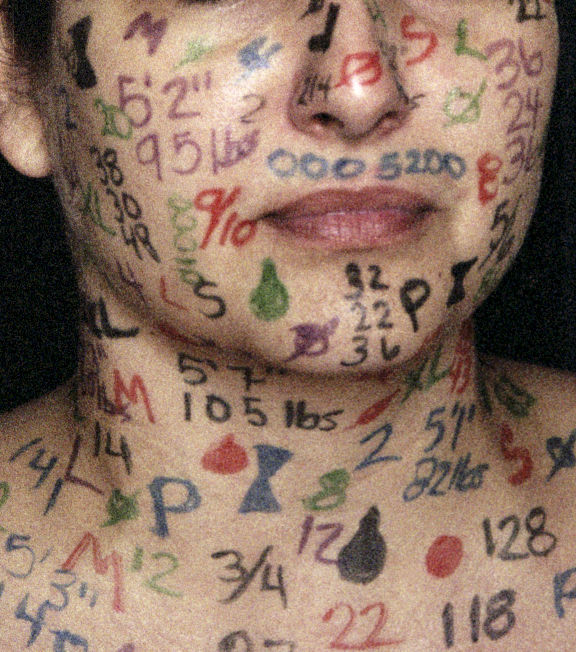
We have a lot of different ways to describe ourselves. We’re really complex as individuals and we have a lot to offer but, unfortunately, we tend to try and wrap ourselves up into neat little packages that can be explained with just a few words or numbers. You might see yourself as a number on a scale, an age, an IQ, or a salary range. Maybe you tag yourself with your gender, nationality or preferences. But you’re more than just numbers and labels.

When I first meet with a client, we often start our coaching relationship with an informal conversation. “Tell me about yourself” usually leads to a laundry list of these labels. Maybe we’ve been so conditioned to have a “30-second elevator speech” ready that we revert to this short-hand method of describing ourselves out of habit. Asking how others see them sometimes renders more details but just marginally. What tends to break the pattern is story telling.

When I ask “Tell me the story of your life and where you want it to go” that usually results in a more rich and detailed view of the individual. It’s difficult to move through a plot and fully describe a desired state with just a few words. This is a great exercise for anyone to go through to more fully understand who they are and where they want to go.

On paper or online, create two pages. Title one “How I Got Here” and the other “Where I Will Go.” Take about an hour and write these two stories using complete sentences and with detail. Put them aside for a day or two then come back and read them.

How does your detailed story change how you think about yourself? How will you talk about yourself to others going forward? It’s likely you now have a more full picture and a few labels simply won’t be able to convey all of the great things you have to say about yourself!

Give this exercise a try and let me know how it went for you.

Photo credit: Christi Nielsen / Foter.com / CC BY-NC-ND

Self Acceptance

man-in-the-mirror-1

I recently had a talk with a woman about an emotional experience she had at a gym. It was her first visit. She’s overweight and she felt really self-conscious being at the gym. She felt everyone was watching her, thinking why was she there and that she wasn’t good enough to be there. She worked herself into such a negative mental state that she stopped her workout after only a few minutes and left the gym in tears.

A similar incident was mentioned in my post about fear. The same false evidence was coming into play for this woman but the issue went deeper. As we talked, she uncovered that she felt unaccepted. She also couldn’t accept herself.

Acceptance is the basis of compassion. To truly empathize with another, you have to accept them for who they are instead of trying to change them to what you want; that’s simply manipulation. When people think about self-acceptance, however, the thoughts are less charitable. For some reason, we equate acceptance with “settling” and they are completely different.

Look at the incident at the gym. She obviously wasn’t settling for her current physical state. She was in the gym doing something about it to better herself. At the same time, this desire for change also interfered with her accepting who she is right now. She saw herself as less than others. A little coaching got her to realizing she is equal and simply a person in a state of transition. It was a very subtle change in perception, but the discovery allowed her to return to the gym and start working towards her new level of fitness.

Accepting yourself for who you are in the moment does not mean you’re giving up any vision of a better you for your future. It means you’re acknowledging your strengths and weaknesses and allowing yourself to grow and progress without any false, negative self-judgement. You’re showing yourself the same compassion you would have towards anyone else.

How might accepting yourself for who you are allow you to make progress towards what you’d like to become?

Photo credit: Jon Newman / Foter.com / CC BY-NC-ND

How to Manage Perceptions of Limited Scope

fish puzzle

You get what you look for…..

We tend to cloud our thoughts with perceptions of limited scope. Have you ever used one of those puzzles where something is printed in red and blue ink and, to see something hidden in the printing, you look through a red plastic film? Our perceptions are just like that. If we look at life through a single colored lens, we’re going to miss the whole picture.

If you think the world is full of people out to get you, that’s all you’ll see because that’s all you’re looking for. You’ll miss the fact that someone offered to help you with an assignment or complimented your choice in music. If you’re unhappy with your looks and are always finding flaws in the mirror, you’ll miss those striking eyes or beautiful skin. You belittle yourself because you’re not making progress at work and lose sight of the fact that you’re an incredible father and husband. We all have these lenses but the more we can learn to drop them, the more fulfilled lives we’ll lead.

We trap ourselves into these limited perceptions simply through habit. We can expand our perceptions by learning to question ourselves and testing whether we’re operating from true knowledge. Once simple technique is “relabeling.” When you find yourself using a limiting viewpoint, mentally label it as such and give yourself a new label. For example, if you’re looking in the mirror and noticing all of the wrinkles and thinking how old they make you look, stop and think “I’ve just labeled myself as ‘old.’ From now on, these wrinkles are called ‘wisdom.’ ” In a while, you’ll notice that the way you see the world will start to expand and your perceptions will become less negative and constrictive.

What labels do you incorrectly use for yourself and how can you create some new ones?

How to Approach Mid-life Rediscovery

ID-10033333

I work with a lot of people, mainly men, that are in or nearing those years that we sometimes call “middle age.” Our society still places a stigma on age through a stereotype that older means less energy and creativity. Sometimes, people will go out of their way to restore or regain their virility, worth, liveliness and energy. This is sometimes given the derogatory label of a “mid-life crisis.” It’s not a “mid-life crisis;” you’re simply rediscovering yourself!

Let’s say you’re in these “mid-years” and think “That’s it, I can’t take this anymore. I’m doing something about this.” A common roadblock at that point is often a strong sense of guilt. At this age, you likely have a number of responsibilities; family, career (maybe more than one) and social commitments. I’ve worked with quite a few people that felt they simply couldn’t take the time to get some exercise, learn to eat right or spend time on creative pursuits because too many people are depending on them and they simply don’t have the time to do something for themselves.

Let’s highlight a phrase here: other people are depending on you! If you’re not at your best, you’re hurting more than yourself. You’re likely robbing the people you truly care about from being with the best version of you that you have to offer.

From a biological standpoint, there’s nothing that says we have to decline substantially physically as we age. Most of the change I see is all mental. As people get older, they can start to lose confidence in their ability to be fit, healthy and happy. They lose their edge. If they have health issues, they get trapped in a spiral of despair and worry instead of taking control of their health and doing what’s needed to restore the healthy life they deserve. Is it easy to turn that ship around? No. But you have a choice (you ALWAYS have a choice) you can either live the rest of your life unhealthy and unfulfilled or you can make the choice to live the life you were meant to live. And most likely the one that the world needs you to live.

If you make that move to restore your gusto, do it knowing you have the right to be healthy, happy and vibrant. Just hit 50 and you want to start a rock-band because it’s what you’ve always dreamed? Awesome! If you’re in your 60s and lifting weights, good for you! Nearing 70 and just starting yoga? Very cool! Never look at these opportunities to rediscover yourself as some sort of “crisis” and never feel guilty. This is your life to live….and you still have plenty of years to rock!

Image courtesy of photostock / FreeDigitalPhotos.net

What if you had to lose a few inches to keep your job?

40-290-notch-6

Getting in shape, improving your diet and regaining your health can be tough. Like any other change, you have to want it for it to happen.

Everyone goes through the same cycle: you first realize you need to make a change, you decide to make the change, you create a plan of action and then you get working on that plan. All too often, people simply never make it to that last step. The main culprit, often cloaked in “it’s too hard,” is really “I’m too scared.” People are afraid of failure not realizing that failure is a natural part of the process. It just takes some determination and grit to pick yourself back up and keep going. I often use the analogy of learning to ride a bike as a child. You fall a few times but you’re so excited to be learning to ride and you have such strong visions of riding off with your friends and having fun that you just keep getting back up; skinned legs and all. The process of weight-loss really isn’t any different but it often makes people shut down and give up hope.

Yesterday, I read an article about an Airforce Colonel that threw away his military career instead of losing two inches. Now, there may be more to the story, but this really struck me. To meet the minimum requirement, he had to drop his waist size by two inches. It varies by individual but, for me, that would have been about 12 pounds. I’m assuming the colonel knew the requirements and was likely aware of his upcoming fitness test. He couldn’t find it within himself to prepare and shed a few pounds? Was the choice to do so that threatening that he preferred to simply step down?

It’s scary but if you really want to take control of your life and create a healthy lifestyle then know that you can do it. Like learning to ride a bike, you just need to have a clear picture of your goal. Break it down to smaller goals if you have a long way to go. One technique I use with my coaching clients is called dialoguing. I walk them through the process of clearly visualizing their new, healthy self then we have a conversation that takes place six months in the future. We talk about how they got to their goal, how their life has changed and where they’re going next. I’ve seen this exercise completely change the mindset of people that just couldn’t quite get into full action mode. It gives them that vision they need to get back on the bike.

If you look in the mirror and feel like you need to make a change then move forward with the confidence knowing it’s completely within your power. If you really want it, it’s yours!

Photo credit: bark / Foter.com / CC BY

Lack of Commitment

swallowed-in-the-sea

I work with some really driven people. They have thriving businesses, they are successful in many areas of their life and will often tell you how committed they are to their customers, innovation, their employees, etc. Why then is it so difficult to show this same level of commitment to themselves when it comes to their own health?

For a number of my clients, there is usually a diminished sense of confidence. Even when they say they are committed to doing something for themselves, the idea of failure in that task paralyzes them. They’d rather not try than try and fail. These are the clients that often reply back that they are “lazy” or “just forgot” when we explore their level of commitment. But confidence is definitely not an issue for my group of driven clients. It’s their confidence that has gotten them to where they are today. They are competent and ready to move forward. Why are they stuck?

I think a picture is starting to form for me. There’s a very fine distinction between being confident and having a high level of self-worth. You can know that you’re good at something and can make things happen but not believe you are worthy of the outcome. Many successful business owners might say they work so hard because of their employees or their customers or their family. How many will say they have attained their success because they deserve it?

Getting fit and healthy requires time. I think some of my driven clients have developed a sense of guilt in taking any time for themselves because they have a deep commitment to make things happen for others. However, if their health should fail, they can’t live up to those commitments. Not to mention they’ve robbed themselves of the healthy lifestyle they do deserve. Pointing out the disparity of their attention and the potential risk of not caring for themselves sometimes has enough of a logical impact to move them towards action.

For a more lasting change, it takes affirmation of worth and frequent positive reinforcement. It took a number of sessions with one client using various coaching techniques before I heard them say “You know what? I get it now! I really do want and deserve to be healthy! What have I been doing to myself all these years?!” After this realization and shift in perception, they really were ready to stick to the commitments they made for their own health.

What’s holding you back from getting fit and healthy? Is it a fear of failure or the belief that you don’t (yet) deserve it?

Photo credit: KellyB. / Foter.com / CC BY

Choose Well and Just Keep Going

IF

My wife came home from her yoga class the other day and she was really excited.

Wife: “I did really well in class today!”
Me: “Really, what’d you do?”
Wife: “I was doing baddha konasana [bound angle pose] and I went to my usual spot and stopped. Then something told me to ‘just keep going’ and I did!”

My first thought was, wow, it really is that simple. What if we did the same more often in our lives? What if, every time we reached some self-imposed limitation, we simply “just keep going?”

Think of how often we create our own barriers in our careers, relationships and personal care. You’re not going for that promotion because “you’re not smart enough.” You’ve stopped looking for the right person because “you’re not attractive enough.” You just aren’t getting to the gym because “you’re too tired.” Motivation, determination and will-power are great—if you have them. The “something” that we all can use to move forward, and you’ve heard me say this before, is choice.

We’re choosing machines. Our lives are full of choices, big and small. We can fairly easily decide what to wear each day, what we want for lunch and whether to watch TV or read a book in the evening. These are easy choices because there’s little risk. What makes some choices really difficult is fear. Fear of failure and disappointment.

False
Evidence
Appearing
Real

Our fears of failure and disappointment originate from some twisted reality we’ve created in our mind. Let’s take the gym thing as an example. Quite often when working with clients, together we uncover that the “I’m too tired to go to the gym” is really “I’m afraid to go to the gym because everyone is looking at me and I’ll be embarrassed.”

False Evidence #1- What’s the likelihood that everybody really is looking at you? What’s their purpose for being at the gym?
False Evidence #2- Whose choice is it to be embarrassed?
False Evidence #3- OK, what if everyone was looking at you and you did feel embarrassed? What choices do you still have?

It’s that third one that really instills the fear. Many people feel they wouldn’t have the fortitude to stick it out and they’d chalk it up as one big failure on their part.

It always comes down to choice. Are you going to stop at your usual spot or just keep going?

Photo credit: zen / Foter.com / CC BY-NC-SA