Will the Real You Please Stand Up!

551725158_f7605d935e_b

I just finished reading The Great Work of Your Life by Stephen Cope. In it, the author uses the lessons of The Bhagavad Gita to explain the concept of dharma in our modern life. Dharma is our vocation or calling and it gives us a “blue print” to build our life. He quotes Henry David Thoreau,

One should be always on the trail of one’s own deepest nature. For it is the fearless living out of your own essential nature that connects you to the Divine.

Finding and then embracing our calling helps bring us to our true self. When I think of vocation, I think of “doing.” In the discussion of dharma, it really goes far deeper. We’re not talking about just our career but our true sense of who we are; being authentic.

Talking about authenticity and being true to ourselves reminds me of another author. I’ve mentioned Brené Brown in the past. In her works, she points to authenticity as a cornerstone of wholehearted living. Authenticity is about being the real you and not just trying to “fit in.” When you’re fitting in, all of your energy goes into being what you think others expect of you so you’ll be accepted. To have a real sense of belonging, you have to be your authentic self. You need to be accepted for who you truly are, scratches and all, and this also requires being self-accepting.

It seems like we’re always comparing ourselves to others. Someone has a nicer house or car, a better job title and bigger paycheck or looks better at the gym. We not only want to be just like them; we want to be just a little bit better. Our culture also has some expectations of us. Men, for example, should control their emotions, be productive and financially successful and take control. If you’re always doing what you think others expect of you, this can lead to a life of diminished feelings, a constant pursuit of financial and professional stature over everything else and few meaningful connections. It takes courage to let go of what others think and do what’s right for you. However, you only get one life.

How does this all tie together? To live your most fulfilling life, you need to simply be the real you. A big part of that is figuring out why you’re on this planet. Will following your bliss lead you to your true self or will being you lead you to the correct path in life? The answer is “yes.”

How can you lead your ideal life over one that someone else has created for you?

Photo credit: assbach / Foter.com / CC BY-NC-ND
Ignore Your Itty Bitty Sh*tty Committee

342644561_1e1dca4e64_b

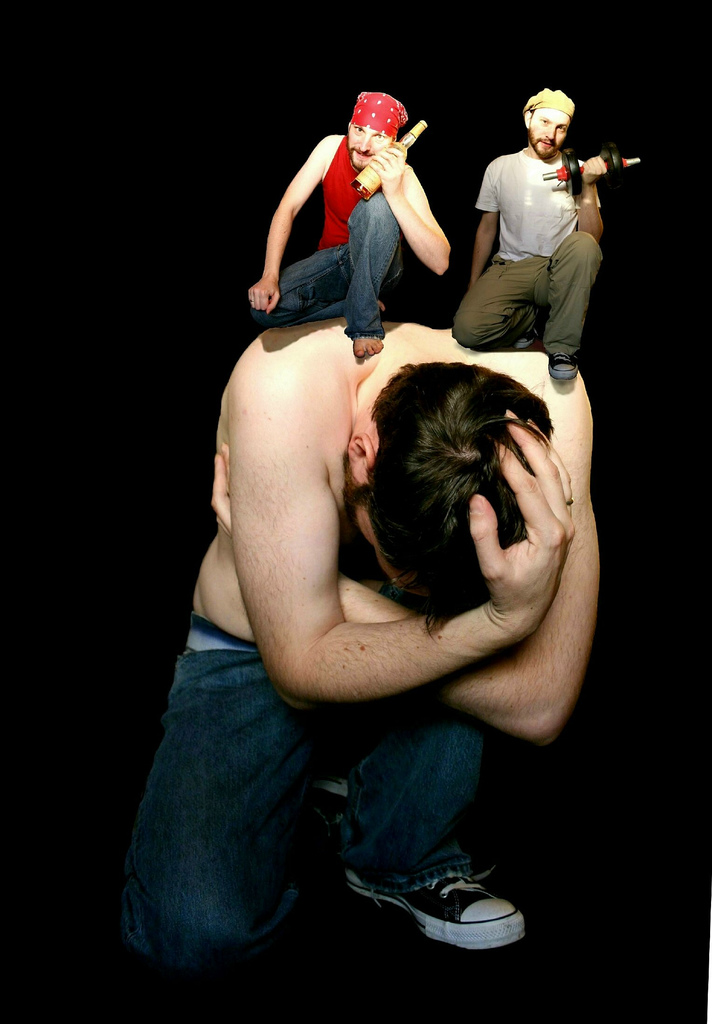
We each have our own inner critic or gremlin. I’ve even heard it called the “Itty Bitty Sh*tty Committee.” This is that voice (or the voices) you hear in your head telling you that you’re not good enough, smart enough, trim enough, rich enough, strong enough….to have the life you deserve to live. Some of its favorite words are “can’t,” “shouldn’t” or “should have” and “never.”

Most of us can probably name or point out our gremlin. It’s been with us so long that we’re very familiar with how it behaves. For example, I’ve named mine “Killjoy.” My gremlin loves to taunt me with an overly burdensome sense of responsibility…for everyone and everything. There’s no time for fun and play when there’s so much that needs to be done! My gremlin has a particularly good time needling me because it knows it is completely contradictory to a core value I hold and that’s the importance of being playful.

So, I wage war with my gremlin and “smite” it on a regular basis, right? Hardly! Our gremlins are very strong and they thrive on our energy. The more attention we give them, the stronger they fight back. Instead of fighting, the key is first acknowledgement then dismissal. You really hurt your gremlin when it knows it has been seen yet you’re strong enough to do your own thing. In his book, Taming Your Gremlin, Rick Carson tells us that

To be at choice from situation to situation and from moment to moment is vitally important in taming your gremlin.

One of the most common gremlins for anyone that used to be overweight is self doubt or fear; lacking confidence and always worrying about gaining weight back. The voice tells you, “You might have success now but you can’t sustain this.” or “You’ll never be able to relax in your new skin. You’ll always have to worry about every little thing you put in your mouth because you know you’ll mess up eventually.” When these really negative thoughts pop up, first recognize them for what they are; untruths being sustained by runaway perceptions. Next, remember, you always have choices. In whatever situation you find yourself, will you choose to listen to your inner critic or will you use information you know to be true? How did you lose that last pound, or ten or hundred pounds, in the first place? You know what your body needs to be healthy now. No gremlin can suddenly take the power of your knowing away from you. Ignore it and choose what’s right for you.

Be aware that your gremlin is pretty smart. As you get better at ignoring its voice, it will change and turn into something new trying to get your attention again. Stay wary and never let the bugger get the better of you.

Photo credit: practicalowl / Foter.com / CC BY-NC

How Inspiration Leads to Motivation

5250487136_04241b5283_b

I’ve worked with a few people recently that said they were lacking motivation. This is actually a great coaching topic because the answer can only come from within. No one can make you motivated. However, our perceptions can be molded through study and contemplation. We can be inspired by others. I went looking for individuals that had successfully motivated themselves to achieve great things with regard to adopting a healthier lifestyle. I found a few stories that could help you change the way you look at your own challenges.

First, there’s Eli Sapharti. In his own words, Eli made a journey from FAT Boy to FIT Man. He lost 110 pounds to be in the best shape of his life in his 40s. He has now devoted his life to helping others do the same.  Next, I learned about Rick Wyckoff who is “Constructing a New Rick” on Facebook. Rick struggled with obesity since childhood. Now, this mild-mannered but driven individual is recording his weightloss and engaging others to join him in a very active community he has built on Facebook. Finally, I discovered Nathan MacDonald, the Fotographing Fat Kid. Nathan is documenting his “epic battle” to lose weight in a simple but informative blog. (He’s always wanted one, now he has one.)

What do these three men have in common? They all developed a very clear vision of where they wanted to go and why they were going there. I’m guessing the “how” and “when” may have sometimes still been very valid questions, but you get a sense from their writing that they no longer question their destination.

How can their stories help you? Simply follow their lead. If it isn’t already cemented in your brain, consider the change you need to make to reach a healthier lifestyle. What will the change provide? How will it make your life better? Who else is involved? (Maybe you’re “doing this for the kids.”) What are the costs if you don’t change?

Other questions will start popping up too. “What if I fail?” is, unfortunately, pretty popular. Well, I’d come right back with a follow-up question…“What if you succeed?”

Photo credit: mariachily / Foter.com / CC BY-SA

Recovering from Self-Esteem Rollers

172729251_7a7bba2d5f_o

If it’s not clear from the word, your self-esteem originates from within, not from others. Accordingly, it isn’t anyone’s right to take it away from you. But we let it happen.

If you’ve been overweight for a portion of your life, it’s likely that your self-esteem has taken a hit. From personal experience, I think the impact is greater if that period included your childhood or teen years; but then again, kids are resilient. The feelings of being unworthy have built up because we allowed the negative talk of others (I call them esteem rollers) to create a mental picture that we’re not whole or complete. Our need to belong has been thwarted.

Changing our outside by getting in shape doesn’t magically fix the internal wiring. You may notice that you still have a difficult time taking a compliment; it sounds contrived or forced. Or maybe you go fishing for compliments? These are just two signs that you may still be entertaining those negative thoughts.

The concept of self-esteem and the psychology behind it is pretty deep. Numerous researchers have spent their lives documenting their findings. I’ve done a fair amount of reading on the topic and have helped a number of individuals examine their perceptions. Below are just a few things I’ve learned that help rebuild self-esteem.

Don’t Compare Yourself to Others

There will always be someone that’s thinner, stronger, faster, richer, smarter…. Don’t drive yourself crazy by pining for what you don’t have. Instead, be grateful for what you do have.

Practice Positive Self-talk

Like, love and respect yourself. It’s that simple.

Don’t Look for Acceptance from Others

You can’t look for your self-worth to originate from the approval of others. You do need to be self-accepting. I’m not saying to give up on becoming the best version of you possible; you just need to acknowledge your strengths and weaknesses and own them.

Focus on What Makes You Special

Revel in your difference; it will likely be what draws others to you.

Surround Yourself with Supportive People

Create a support network of people you trust and that appreciate the authentic you without judgement. This will give you the true sense of belonging we all desire.

Take Care of Yourself

Eat right, exercise, and do what’s right for you.

Discover your Life’s Purpose and Make it Happen

This last one is probably the most difficult. For some reason, people have a hard time contemplating the fact that there’s likely a specific purpose for them. Something they are uniquely designed to contribute to this world. It takes a lot of introspection, but finding that purpose and pursuing it seems to be the vitamin B-12 for self-worth.

Regardless of where you’re at in life or what events may have caused the negative images that degraded your self-esteem, know that it’s completely in your power to recharge it. After all, it belongs to you.

Photo credit: dan taylor / Foter / CC BY

Do You Hide Under a Joke Cloak?

133438186_2223af5f2f_b

“I have the body of a god…Buddha”

“It’s a washboard stomach…just with a full load of laundry.”

“I’m really in shape. Round is a shape, right?”

Some use humor to deal with uncomfortable situations. It’s not a bad mechanism. Self deprecating humor can, however, get you trapped into a really negative mindset. We use these jokes for different reasons. If we make people laugh, that means they like us, right? Or maybe we think if we beat people to the punchline, the joke will be less painful? Be honest with yourself…are these really the case?

You see, we create our own reality. If we think we’re a joke, then we project ourself as the same. That impacts how others treat us, creating a vicious circle. If you talked about your friends the way you talk about yourself, how many friends would you have? It comes down to respect. You deserve it, you want it from others so you need to show it to yourself.

This negative self-talk is just like any other bad habit you’ve ever addressed. First, you need to become aware of it. Notice when, where and how often you make yourself the subject of your stand-up routines. Next, replace it with a positive behavior. Instead of jokes, try honesty. (Ah, that can be scary!) How about something like “Yeah, I’ve struggled with my weight for years. I have a few more pounds to lose, but I’ve successfully lost x pounds in the past few months. I feel pretty good about that!” I think you’ll be surprised at the effect. You’ve provided an affirmation to yourself, you’ve shown trust and honesty towards someone else (what a great gift to them for which they’ll remember you) and just maybe you provided some inspiration to someone that is contemplating a change of their own. Isn’t this worth more than a few laughs?

I’d be curious to hear back from any of you that have successfully turned away from your own joke cloak.

Photo by Flickr user Tom Goskar (CC BY-NC-SA 2.0)

It’s not for Looks, It’s for Life

Id-10057982

The title of this post sounds like the tagline for today’s hottest weight loss program. (If it actually is, I apologize and no endorsement is intended.)

When talking to folks about the greatest challenges they faced after they lost weight, one man said it was coming to the realization that he actually wanted to be fit and healthy, not just x pounds lighter on the scale. His initial motivation for losing weight was to simply look better. Once that was accomplished and he felt better about himself, he wanted to take this a step further. He wanted to be fit in ALL ways.

I’ve been through the process. I understand that weight loss is all consuming (pun not intended) and becomes an integral part of who we are. Once you reach your goal, however, there can actually be a mental vacuum that must be filled. Expanding your life and moving forward in other aspects is important and that’s what this site is all about. In making the transition to maintenance, many feel like they’re always one bite of cake away from being the overweight person they once were. They get stuck in this constant state of dread and panic and find themselves stalled even though they’ve met their goal. By making the mental shift to actually being a fit and healthy individual, you develop the sense of personal trust and confidence needed to thrive.

Once you’ve reached your goal, think about what’s next. What’s your continuing motivation for eating right and taking care of yourself? You may have drop the pounds to look better for a wedding or that vacation on the beach. What can you envision that will act as a strong motivator to maintain the weight loss?

Think about how you feel now. What can you do now that you’ve lost weight that you couldn’t do before? What are some new goals you have to get the most out of that new body? Really stretch yourself and it doesn’t need to be purely physical. Maybe you’ve always wanted to move up in the corporate world but felt your weight may have been holding you back. Picture that corner office and go for it! Sometimes doing things for others can be motivating. If you’re a parent, being around for your kids and being able to participate fully in their lives is a great example. Next time you feel like downing an entire pizza, ask yourself if that will get you any closer to their wedding day.

It’s all about your vision and the choices and commitment you make to get there. Right now, make a list of all the reasons you deserve to be healthy and post that on your ‘fridge or mirror. Better yet, share the list with a friend or two to help you stick to the commitment and hold you accountable.

Image courtesy of koratmember at FreeDigitalPhotos.net

Personal Trainer for Your Life

Id-10078125

In a prior post, I talked about how some guys get trapped in a fat-suit mentality. Even after having lost weight and getting in shape, you can still “feel fat.” To be really successful maintaining the new, fit you, you’ll need to modify some perceptions and activate changes that will increase your confidence and overall well-being. Some guys can do this on their own with the support of friends or family. Others want objectivity, structure and accountability—so they hire a coach.

Think of a coach as a personal trainer for your life; they help you flex some new mental muscles and motivate you when you need it. People that work with a personal trainer want to get more out of their time at the gym and see real results. Investing in a coach gets you similar progress in building your confidence and self-esteem.

Coaching isn’t therapy nor is a coach there to solve your problems. Instead, a coach builds a partnership with you to help you grow and use your inherent abilities to reach your full potential. A coach listens, asks questions, opens possibilities and holds you accountable. A coach is a navigator that helps you along the course you’ve charted for your life.

Some common topics of coaching sessions include:

  • Confidence to end the fear of gaining weight back
  • Increased self-esteem allowing you to take (or stop fishing for) compliments
  • Accepting, enjoying and getting the most out of your new healthy body
  • No longer feeling awkward at the gym
  • Broadening your focus to move forward in all aspects of your life
  • Leaving the “old you” behind

These are just some examples. There are a bunch of roads ahead of you just waiting to be explored! Now, everyone comes to the coaching experience with their own needs and goals. You can expect:

  • Clearer vision of where you want your life to go
  • Exposure to different directions or ways to get there
  • Help getting out of ruts
  • Forward motion and progress towards your destination

The coaching experience isn’t right for everyone. Frankly, some people just aren’t “coachable.” Those that seek out ways to improve themselves and want to really get their life moving forward are the best candidates. If you’re interested in seeing if you’re “coachable,” send me an email. You might be surprised by where you’ll go and how fast you’ll get there!

Image courtesy of KROMKRATHOG at FreeDigitalPhotos.net

Clothes Make the Man: I Hated the Husky Section!

Id-10091402

For some it’s a pleasure while others see it as just a chore. It can also be terrifying. I’m talking about clothes shopping.

I don’t know if they still have them in department stores but I had to buy all of my clothes in the “husky” section when I was young. This was essentially a men’s section they put in the children’s clothing department for the fat boys. I was wearing a 42″ waist in eighth grade so there was no way I could fit into traditional kids’ clothes. Accordingly, most of my clothes weren’t in line with what other kids my age were wearing. [Great, just one more thing to set me apart from my peers.] I hated shopping for clothes at the start of each school year. My mom would just cart me off and we’d get it all done in one morning so that the trauma was minimized. For some, this negative experience continues into adulthood. I recently heard from one guy that simply lost it and broke into tears in the middle of the men’s department because he couldn’t find anything that fit.

For most men, buying clothes is a pop-in-and-just-get-what-I-need event or they buy online. However, this doesn’t stop retailers from marketing to men or those that buy their clothes for them. You can pick up any health magazine and see the most current trend being worn by a fitness model with a sub-30″ waist and 44″+ chest. While women have dealt with this for most of their lives, I think men are just now starting to feel similar pressure to look good. When you’re fit, buying new clothes might not be an issue (other than coughing up the dough) but when you’ve been buying your clothes in the big-and-tall section until recently, how do you make that transition?

As I started losing weight, shopping for clothes still wasn’t all that enjoyable because I had some vision of where I should be at any point in time. I’d pick up a large shirt and find I still needed an XL or my pant size hadn’t dropped. Though sometimes frustrated, I pushed ahead and eventually started seeing some progress. I started using clothes shopping as a motivator. I would regularly get a few new things in the smaller size so I knew I always had something that fit well and looked good. These first few new items were always a better brand (relatively expensive) too so there was a financial incentive to not go backwards. I donated my larger clothes as soon as I replaced them with smaller sizes. I felt I had “made it” when I took some shorts into the Abercrombie and Fitch dressing room and had to actually buy two sizes lower than I had expected.

So I share this with you as another example of some of the mental trash that can be taken to the curb once you have lost weight. I know guys that still buy clothes too large either because they simply haven’t thought to go to a smaller size or they’re still trying to hide their body. As you reach your goal weight and figure out what your new size is going to be, treat yourself to some new clothes that fit well. Take a friend or spouse/partner that knows something about style with you and have them give their opinion. You worked hard for the new body and you deserve to look and feel your best. Don’t let prior discomfort or lack of knowledge stop you from enjoying a simple pleasure of life.

Image courtesy of imagerymajestic at FreeDigitalPhotos.net

Ditch Your Fat-suit!

Fatsuit

When you’re overweight, your mind can be full of guilt, longing and self-loathing. Once you start the weight loss process, you’re singularly focused on your diet, exercise and the results on the scale. Now that you’ve finally reach your goal weight, what happens? The activities that have been taking up a good portion of your brain space are no longer needed, creating a vacuum. That vacuum has the potential to suck back in all of the insecurity, doubt and fear from which you worked so hard to free yourself. This creates a healthy, fit person that still feels overweight. You’ve basically put on a fat-suit!

We view ourselves from two different vantage points—how we feel about ourself (internal) and how we think others see us (external.) Our perceptions skew these views rooted in our self esteem and confidence. Our actions and feelings are directly driven by our thoughts or perceptions. If that vacuum pulls back in all of the negativity you’ve longed to be rid of, it will cause you to act and feel accordingly. This will have an impact on your confidence and self esteem and may actually cause others to treat you as if you’ve made no change. You get depressed, fearful, apathetic and wonder what you worked so hard for and BINGO, you slide back. Can you see how we get stuck in this vicious cycle?  To succeed, you need to ditch that fat-suit mentality once-and-for-all and leave the “old you” behind.

Plugging that vacuum is one option. This takes an awful lot of energy though as you constantly try to remind yourself of what you’ve achieved, that you know how to eat, that there’s no rational reason for you to be be afraid, etc. But I think there’s a better way. Instead of patching, how about replacing the space in your brain with new thoughts so that the old ones simply can’t come back?

Think of it this way. What do your naturally fit and healthy friends think about all day? Are they worrying about what every next meal will bring? Do they panic or have a meltdown if they miss a gym day? Probably not. Food and exercise may be important to them but they also have so much more going on in their life. That’s the key; create a full, rich, well-rounded life experience for yourself. By focusing on your overall wellbeing and developing new talents and interests you’ll naturally begin to change your perceptions of the world. You’ll increase your self-esteem and confidence in all aspects of your life. You’ll create a new, vibrant, completely whole you with a fit, healthy body at its core.

So, what to do next? Create new goals and explore new interests. Try something you wouldn’t have done when you were overweight. Do things that purposefully increase your self-esteem and confidence. Take risks; maybe go after that promotion you’ve wanted. Focus on your overall wellbeing. Live as if you’ve always been fit and knowing you have the ability to shape your own future. Yes, losing weight is tough but peeling off that heavy, ugly mental fat-suit can be harder—but you can do it!

Image from Flickr user dsb nola Creative Commons Attribution 2.0

Why are Scales so Scary?

Id-10097302

I think I’m fit and athletic looking. I’m 5′ 10″, have a 29″ waist and body fat around 7%. Notice that there isn’t a mention of weight there? For the last three years, I’ve been staying to a fairly strict Paleo style of eating. The premise is that you can simply eat whatever you want and not gain weight because of the types of foods that are excluded. I don’t eat any grains, starchy carbs or sweeteners and dairy only sparingly. That leaves me with meats, fish, fruits and veggies along with nuts and seeds. It’s worked well for me. I initially dropped another 5 pounds, I have tons of energy and my weight was incredibly stable the first year. In fact, I stopped weighing myself at all a few years ago. As long as my pants are a bit loose in the waist and my shirts are just a little snug in the shoulders, I’m good.

I initially lost 75 pounds using Weight Watchers and I had faithfully followed the system for years prior to “going Paleo.” For those of you familiar with Weight Watchers, you know that they modify their program every few years and in 2010 they made a huge change by going to the PointsPlus system. I talk with a lot of guys that are currently on WW and they always ask for tips and my opinions. Since I haven’t been “on program” for a few years, I found that my knowledge was falling out of step so today I decided to pop back in for my first Weight Watchers meeting in years.

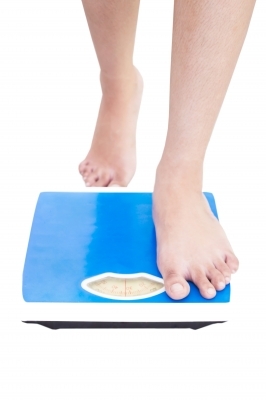
If you’ve never been to a meeting, the first thing you do is weigh in. I started this post describing my current physical state to highlight the absurdity of what happened next. I still broke into a bit of a cold sweat getting on the scale. When I heard my weight, I still had that internal voice say “What, can’t be?!” (Keep in mind that I’m actually well within what WW considers a maintenance range for me and I’m far below my goal weight.)  Now, understanding the power of our own perception, I could quickly “self coach” myself back into the proper mindset that I’m fit and healthy. It brought back to mind, however, the power that one number holds over us.

When you’re overweight, your entire life revolves around the scale. You check your weight weekly. The result can lead to a feeling of accomplishment or, sometimes just as often, frustration, failure, disappointment—you name it. It’s no wonder why, through all that negative conditioning, that stupid hunk of springs, glass and metal causes such a response even after all this time of successful weight maintenance. But really, it’s just a number.

Guys, as you hit your weight loss goals and possibly start putting on some lean mass, keep in mind that the scale becomes less important. Put two men side-by-side, both the same height and weight, but one has some muscle definition where the other guy still looks a bit soft. Does weight matter here? Of course not! You want to be the one with at least a little muscle and the only thing that’s going to show you that is the mirror (or a tape measure if you must have some number.) Ultimately, you need to worry less about the scale and pay more attention to how you feel. Making this huge change will help you move into your new healthy and fit lifestyle, leaving part of the “fat you” behind.

Image courtesy of chainat / FreeDigitalPhotos.net